We often imagine logistics as a simple mechanical process, a steady stream of lorries on the motorway. Yet, it is far more than a transport exercise; it is the lifeblood of the entire cement industry. Without it, everything grinds to a halt, from factory production to the construction sites shaping our landscapes. It is a balancing act, a profession where pinpoint precision meets the unpredictable reality of the road.
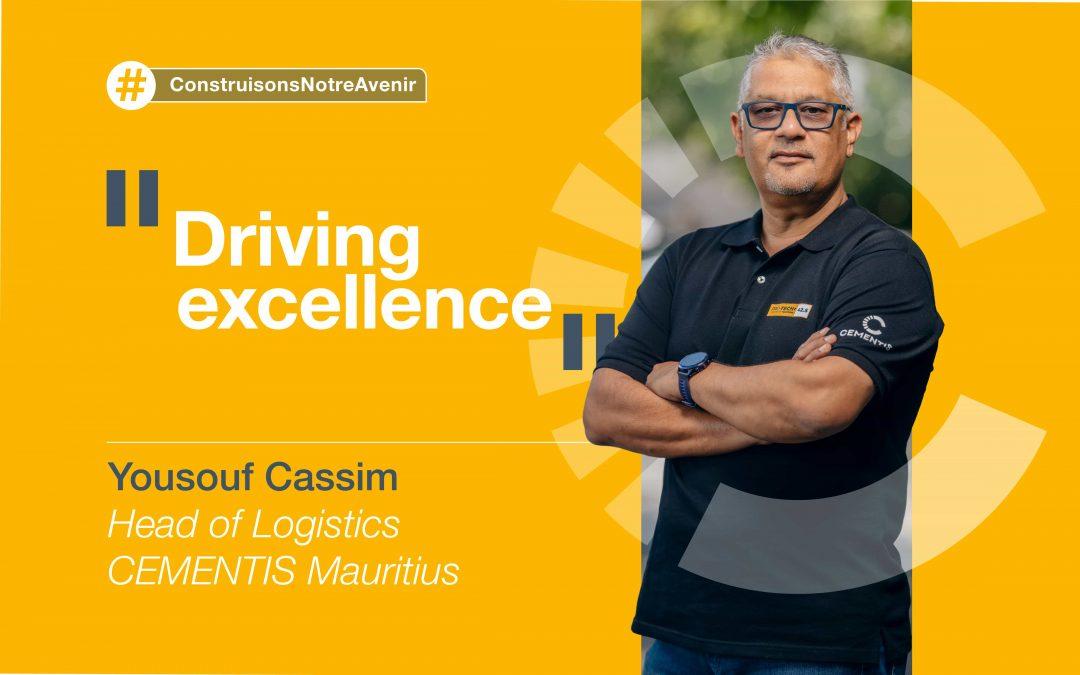
To understand how thousands of tonnes are moved with such agility, we sat down with Yousouf Cassim, Head of Logistics at Cementis Mauritius. Between streamlining workflows and planning for the future, he shared his perspective on a sector in the midst of a major transformation.
Logistics is often described as the backbone of cement operations. How would you define its specific importance within your organisation?
Logistics is at the heart of Cementis, acting as the vital link between production, our distribution centres, and the end customer. It plays a pivotal role: we must ensure constant agility and flawless efficiency so that we can deliver on our promise to the customer.
Since joining, what are the most significant changes you’ve introduced?
My goal was to inject a new sense of rhythm. We’ve prepared our teams to work with much tighter scheduling, ensuring every journey is genuinely productive. We no longer deliver simply “to store”. We deliver because there is a specific and real-time need. We’ve also expanded our partnerships with external transport providers to better support our sales teams. The idea is to move forward together, constantly measuring our performance to keep improving.
Innovation can be daunting in traditional sectors. How have you managed to get your teams on board? Have you encountered any resistance?
It’s true, changing long-standing habits is never easy. People often fear that innovation is a tool for control, when in fact, it’s there to support them. My approach is straightforward: I talk to the teams. A lot. We focus on small, concrete changes, ”quick wins” that immediately prove their worth. When people see the work becoming more fluid, trust grows. I’m a great believer in empowering; I’m not here to hand down orders from the top, but to provide a clear direction… and a firm hand when the situation calls for it.
The world has faced significant supply chain disruptions recently. How have you protected your operations against these shocks?
The impact was sharp: rising fuel prices, unforeseen delays, and general uncertainty. To stay resilient, we tightened the bonds between sales, production, and logistics. We diversified our fleet by engaging several transport partners to meet demand and optimise our routes. Today, we never set out without a “Plan B.” We use data and key performance indicators (KPIs) to monitor turnaround times and take immediate corrective action where necessary.
The conversation around “green” logistics is growing. Is this realistic for a company of your scale?
It’s a challenge, certainly, but more importantly, it’s a necessity. In our industry, transport carries a heavy carbon footprint. Our first concrete step is simple common sense: optimising our flows so we don’t travel unnecessary miles. Fewer wasted kilometres means less pollution. Whilst the transition to 100% electric heavy goods vehicles is not yet practically feasible, we have already taken the plunge with our fleet of light vehicles, which now consists of hybrid and electric models.
What is your vision for logistics at Cementis over the coming years?
I envision a seamless organisation where every decision is guided by precise data and a shared strategy. I want us to reach a level of operational excellence where we aren’t over-reliant on any single factor, but instead build solid human partnerships with our carriers. In short: to be efficient, to be agile, and to protect that bond of trust we share with our customers.