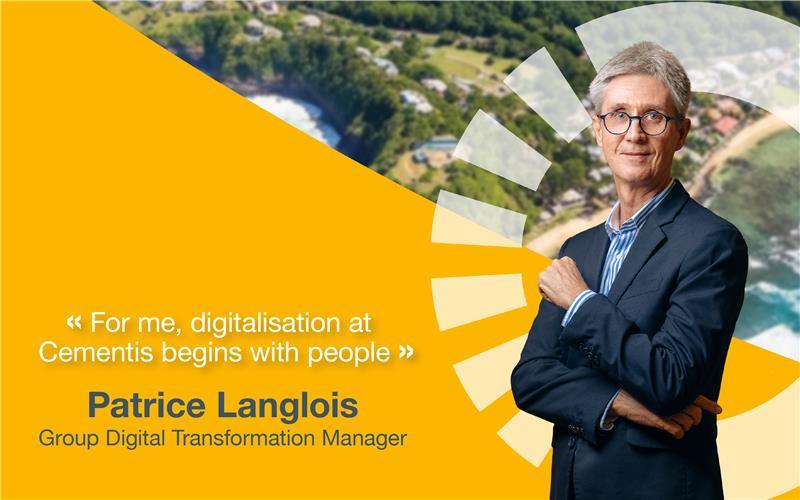
We spoke with Patrice Langlois, Group Digital Transformation Manager, about how digital transformation is evolving within Cementis and what it means for teams, customers, and the future of the business.
Could you share your vision of digitalisation and your role within Cementis?
For me, digitalisation at Cementis is first about people. Technology only creates value when teams adopt it, take ownership of it, and use it to continuously improve how we serve our customers.
As Group Digital Transformation Manager, my role is to support the evolution of our business processes and systems, so they remain efficient, clear, and aligned with operational needs. What I value most is, helping teams embrace change, simplify their daily work and turn information into meaningful decisions that benefit both employees and customers.
When you first joined Cementis, what was the digital transformation challenge and how did it evolve?
When I first joined, digital transformation was mainly about modernising our tools and reducing manual processes. The focus was on efficiency and simplification.
Today, it represents something broader. It is a cultural shift. We are moving away from paper-based processes towards shared, reliable information and collective ownership of data across the organisation. Digitalisation is no longer only about systems; it is about how we work together and how we use information to make better decisions.
How digital transformation accelerate Cementis’ efficiency, customer experience, and competitiveness?
Digital transformation enables us to operate faster and with greater accuracy. It improves visibility across our operations, which allows teams to respond more quickly and coordinate more effectively.
For customers, this translates into clearer information, smoother interactions, and better service reliability. By strengthening responsiveness and transparency, we improve service quality and maintain our competitiveness in the Mauritian market.
What was the internal transformation to support e-commerce?
Several functions had to adjust to ensure consistency between operational reality and digital interaction. Logistics coordination, invoicing workflows, stock visibility, and customer communication all evolved to support online ordering.
The transformation was not limited to implementing new tools. It required process alignment and strong team adoption. The objective was to ensure that what customers see online reflects the real-time operational situation on the ground.
What has been the biggest challenge in aligning traditional industrial operations with digital tools?
The biggest challenge is not the technology itself, but change management. Industrial environments rely on long-established habits and structured routines. Therefore, success depends on helping people understand the value of new systems, trust the data, and integrate new practices into their daily work. Digital transformation only delivers results when teams fully adopt it.
With the rise of AI, where does Cementis position itself?
We approach artificial intelligence pragmatically. For us, AI is a decision-making support rather than a replacement for expertise.
Our objective is to strengthen a data-driven culture where information helps teams anticipate needs, optimise operations, and better serve customers. Technology should empower human judgment, keeping it at the heart of every decision.