Across our islands, the construction industry is transforming at pace. To support this momentum, the real challenge lies not merely in materials or technology, but above all in people. Developing core competencies, shaping meaningful career pathways and passing down strong local know-how are the true pillars of sustainable regional development.
To mark Careers in Construction Month, we sat down with Carole Ménager, Group Chief People Officer at Cementis, to discuss the sector’s ongoing evolution, the growing appeal of our professions and the future outlook for builders across the Indian Ocean.
With the expansion of construction across our islands, which new roles and skills do you see as essential on the ground today?
Construction is evolving rapidly throughout our region. Alongside traditional technical trades, which remain vital, we are seeing an increasing need for new skills tied to digitalisation, environmental performance, and health and safety.
In particular, we need professionals who can master digital tools, understand and apply AI fundamentals, work with data analytics and maintain increasingly automated plant and equipment. Sustainable construction skills have also become essential: optimising material usage, reducing carbon footprints, boosting energy efficiency, managing waste and adapting infrastructure to climate risks.
In island territories where land and resources are constrained, and supply chains can be intricate, versatility, foresight and the ability to solve problems locally are crucial. Finally, beyond technical expertise, the industry actively seeks professionals who can collaborate effectively, communicate clearly and embed safety as an everyday priority.
In light of these emerging needs, what must industry leaders put in place to attract top talent?
First and foremost, businesses need to raise the profile of construction professions and better showcase the vast array of careers on offer. Construction is no longer confined to traditional on-site roles; today, it spans engineering, digital tech, environmental management, logistics, quality assurance, safety, innovation and project management.
Attracting talent also requires building robust bridges with schools, vocational training centres and universities. This means offering internships, apprenticeship schemes, site visits, industry talks and training pathways designed hand-in-hand with educational institutions.
Candidates are also increasingly looking for purpose. Employers must articulate a compelling value proposition: contributing to local development, building essential infrastructure, driving the environmental transition, and working in an environment where safety, inclusion and professional growth are genuinely prioritised.
Finally, in our islands, attracting talent means creating real local opportunities. Young people must be able to envision an ambitious career path right here, without feeling they have to move abroad to succeed.
Beyond recruitment, what are the keys to ongoing development and long-term retention?
Retention begins on day one with onboarding. New hires must quickly gain clarity on their role, company expectations and the career paths open to them. They also need to feel supported by their managers and recognised for their contribution.
Learning must then be approached as a continuous journey. In our industry, technology, standards, environmental expectations and working methodologies move quickly. It is therefore vital to blend technical training, industry certifications, on-the-job mentoring and leadership development.
Knowledge transfer is equally critical. We have highly experienced professionals whose expertise represents a priceless heritage. Structured mentorship schemes allow us to pass on this invaluable know-how, honour senior colleagues and accelerate the growth of our younger teams.
Ultimately, people stay when they see a future within the organisation. Mobility across different roles, sites or regional entities within the Group serves as a powerful driver. However, retention also rests on solid fundamentals: quality management, a safe working environment, fair recognition, genuine active listening and a healthy balance between performance and quality of life at work.
Do you sense that the younger generation’s perception of construction careers is shifting in the region?
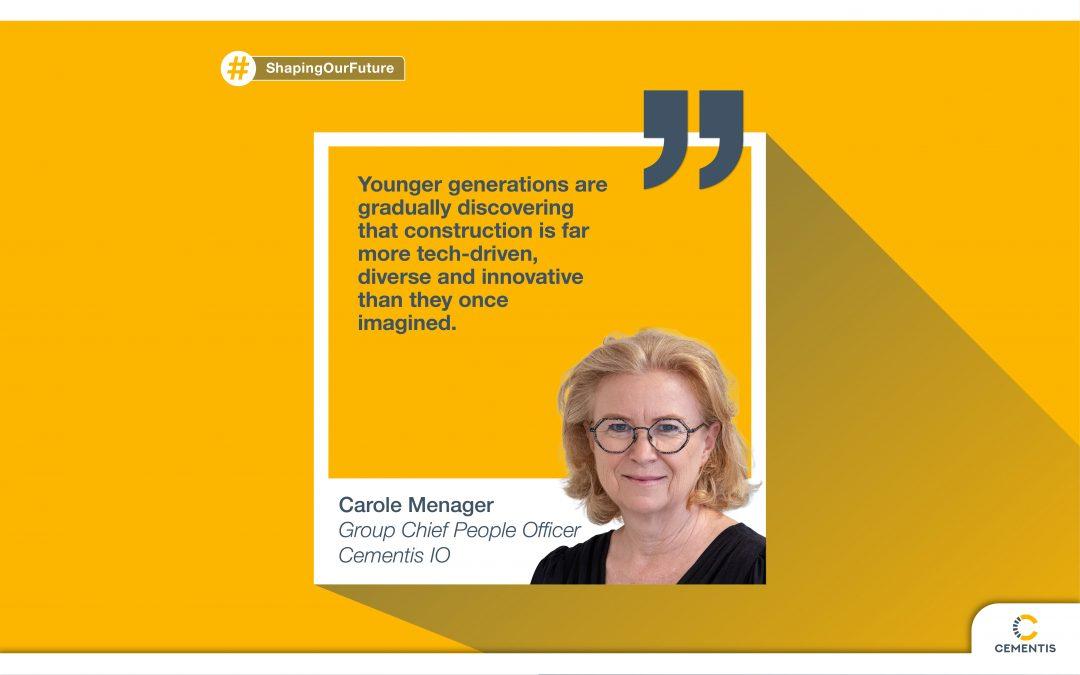
Yes, I believe perceptions are beginning to shift, though there is still work to be done. Younger generations are gradually discovering that construction is far more tech-driven, diverse, and innovative than they once imagined.
They are particularly attuned to sustainability, climate resilience, and local impact… and construction lies at the very heart of these challenges. Building better, managing resources responsibly, developing infrastructure tailored to island life, and enhancing living standards are missions that carry genuine meaning for young people.
To accelerate this shift, we must show them the reality on the ground. Real-life testimonials from young professionals, site visits, work placements, internships and clear career maps are vital. We must also elevate technical and vocational pathways, which offer rewarding career prospects, progression and entrepreneurial opportunities.
Finally, advancing gender balance remains essential. Construction, industrial and production roles must be presented as accessible to everyone. Businesses have a central role to play in creating inclusive environments and giving greater visibility to women succeeding in our industry.
Lastly, what advice would you give to someone considering a career in construction in our islands today?
My first piece of advice would be to get out there and explore the industry firsthand; don’t rely on outdated stereotypes. Visit sites, talk to professionals, complete work placements and discover the sheer variety of paths available.
This sector offers rich opportunities whether you are drawn to technical work, engineering, management, digital solutions, logistics, environmental strategy or entrepreneurship. It also offers the unique reward of seeing the tangible results of your work and its direct impact on everyday life.
I would also encourage developing a dual skillset. A solid technical grounding combined with capabilities in digital tools, project management, safety or sustainable development makes for a highly sought-after profile today.
Lastly, stay curious, remain adaptable in your learning, and never compromise on safety. In construction, learning never stops. It is this capacity to evolve that enables you to build a lasting career and, ultimately, help build the future of our islands.
In summary, careers in construction are built for the future. They sit at the crossroads of key regional priorities: economic growth, local employment, environmental transition and island resilience. Our responsibility as employers is to shine a light on these opportunities and give talented individuals the means to thrive and grow sustainably across our islands.